Miso noodle soup with kale and mushrooms

Miso noodle soup with kale and mushrooms

Simple and satisfying with nourishing miso and chewy noodles simmered in the broth. This recipe easily doubles.

Ingredients

For the soup
2T water
1/4t coarse sea salt
1 scallion, minced (2″ – 3″ green reserved for garnish)
75g cremini mushrooms, 1/4″ slices
1/2T lemon juice
1/2T tamari
2 cups water
1 ‘sprig’ dried kombu (about 1″)
1-2T red soy miso (to taste)
1 cup green kale, coarsely chopped
Coarse sea salt (or tamari) and black pepper to taste

For the noodles
1/4 cup whole wheat bread flour
2-3T cold water
A pinch sea salt

Optional: Additional sea vegetables will go well in this soup, as would sesame seeds for garnish. Replace the cremini mushrooms with shiitake mushrooms if you prefer. Use white miso or just 1T red miso for something a little more neutral in taste. Add a few drops of toasted sesame oil with the scallions for a little additional flavour.

Method

Make the noodles first, then the soup. Mix the flour, salt and water together until a smooth dough forms. If you need to add extra water, do so a teaspoon at a time. Knead for 3 minutes and set aside in a bowl covered with a warm, moist tea towel. Let rest for at least 10 minutes. Knead another 3 minutes. Return to the bowl for another 10 minutes to rest. Knead another 3 minutes. Return to the bowl for a final 10 minutes.

On a floured board, roll the dough out to a large rectangle, about 1/8″ thick and no less than 9″ long. Using a wheeled pastry cutter, cut 1/4″ noodles, or fold very gently length-wise into thirds (in an S-curve) and cut the noodles with a knife if you prefer. Let the noodles rest while you make the soup.
Bring a large pan with a lid to heat on medium high. Add the water, sea salt, scallions, and mushrooms. Stir fry for 3-5 minutes, or until the pan is starting to brown and the mushrooms are softening. Add the lemon and tamari and deglaze the pan. Stir fry another 2 minutes. Add the water and kombu, and return the pan to a simmer. Simmer uncovered for 10 minutes.

At the 10 minute mark, add the noodles and simmer for 2 minutes. Add the kale and simmer another two minutes. Remove from heat and let stand 2 minutes to cool. Add the miso and stir to combine. Season to taste. Ladle out, garnish with scallions sliced on an angle, and serve.
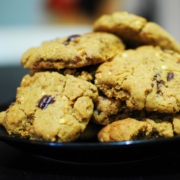
Peanut butter, chocolate chip cookies with ginger and molasses

Peanut butter, chocolate chip cookies with ginger and molasses

The ginger and molasses add a little flavour nuance to this rich, flaky cookie. This makes about a dozen larger cookies, up to two dozen small ones.

Ingredients

1/2 cup unsweetened, unsalted peanut butter (I use crunchy)
1/3 cup coconut oil
1T cold water
1/4t coarse sea salt
1/2 cup turbinado sugar (or more to taste if you have a sweet tooth)
1t blackstrap molasses
1/2t fresh ginger, grated and minced (or more to taste — I use 1t)
1/2 cup all purpose, unbleached flour
2/3 cup whole wheat flour (I use bread flour)
1/4 cup unsweetened plant milk
25g bittersweet chocolate, chipped (I use a fairly traded, organic brand)

Optional: Use ready-made chocolate chips you prefer. You can make smaller cookies, use pastry flour instead of bread flour, use all whole wheat flour, change the sweetener, trade the coconut oil and water for plant-only margarine, add flax or banana for some additional binder, or make an all peanut butter version, but this will affect the overall chemistry. You may have to change the liquid balance and/or the bake time.

Method

Preheat the oven to 350F. Cream the peanut butter with everything up to and including the ginger. Mix the flours and stir the combination into the peanut butter. Stir in the plant milk. Add the chipped chocolate to the dough, reserving about 1/3 to add to the cookies once pressed.

On a baking sheet lined with parchment paper, add the dough in about 2 tablespoon sizes. Press a little of the remaining chocolate into each cookie. Press each cookie lightly with a fork to crosshatch so that each is no more than 1/2″ high.

Bake on the middle rack for 12-15 minutes, shorter for softer cookies, longer for crunchier cookies, depending on your oven. Be careful not to overbake. Ovens vary; use the colour and texture of the cookie as a guide to bake time (they should be lightly browning at the tips for soft cookies).

Remove from the oven and cool on a wire frame for about 30 – 45 minutes for still warm, soft cookies, or cool for an hour or so, cover, and serve later.

Freshly baked garlic, herb bagels

Freshly baked garlic, herb bagels

Although it’s the extreme dry heat of a professional oven that makes the absolute best bagels, it’s possible to make a good bagel at home. Many bagels made at corner shops are made with egg wash, honey, or other ingredients. Commercial bagels are often made with micro-ingredients, such as l-cysteine, and they lack the satisfying chew of a freshly baked bagel. This recipe makes half a dozen, but easily shrinks or doubles.

Ingredients

3 cups whole wheat bread flour
A pinch coarse sea salt
1 1/2 – 2 cups warm water
1 1/2T yeast
1/2T green herbs (I use herbes de Provence)
1/2t garlic powder
2 liter water
1T baking soda
1T blackstrap molasses
2T unsweetened plant milk

Optional: There are a lot of variations for bagels. You can braid the dough for something more European. You can make them smaller with a larger hole and sprinkle them sesame seeds for a bagel in the Montreal style. You can also flavour your bagels as you like (e.g., with onion or cinnamon and raising, etc.), but be careful of interrupting the yeast.

For a plain bagel, leave out the garlic and herbs. Unbleached, all purpose flour will give you a bit more fluff (but you made need less water). You can also sprinkle sesame seeds and other toppings toward the end of the baking. You can also change the sweetener, but be careful about changing the pH balance of the water too much — it’s partly what makes the bagel chewy.

Method

Note, to get the fluffiest, chewiest bagels you can, it’s helpful to have a baking stone for this recipe. If you don’t have one, sprinkle a lightly oiled baking sheet with 1/2T coarse yellow corn meal instead. Or, if you have baking paper rated to 450F, use that. You want a hot, dry oven.

It’s also best if you have a pan large enough to boil them all at once. The longer the bagels sit between the boiling and the baking, the longer they lose their heat and the fluff that goes with it. If you have to do the boiling in batches, remove each to a clean, dry cutting board sprinkled with a little corn meal while you do the remainder.

Start by mixing the flour and salt. Mix the water and yeast according to its instructions. Add the wet to the dry and mix until a smooth dough forms. Add additional water as necessary 1 tablespoon at a time. Knead for about 10 minutes. Let the dough rise covered with a warm, moist tea towel for 2 hours, punching down periodically. Roll out on a floured board. Fold in the garlic powder and herbs. Knead for a minute or so.

When the dough is ready, break into 6 equal parts. If you want large, sandwiched sized bagels, break the dough into 4 parts. Roll the dough out to a long thing tube, about 6″ long and 1 1/2″ in diameter, between your palms.

Once rolled, connect both ends of the tube securely into a bagel shape. The size of the hole varies by style. I make mine about 1 1/2″, and I twirl it on my index finger. Repeat until all your bagels are ready. Cover and let rise another 30 minutes or so. Don’t let them over-rise.

In a large pan, bring the water to a light boil. Preheat your oven to 500F (or 450F if your oven doesn’t reach 500F). Add the baking soda and molasses to the water and return to a light boil. Add the bagels, simmering them in the mixture for about 1 minute, turning over and boiling another 30 seconds or so. Remove the bagels from the water with a slotted spoon.

Add your bagels to your baking stone or sheet. Bake for 10 – 15 minutes until they are starting to brown lightly (depending on the temperature and whether you use a stone, a baking sheet, etc.). Ovens vary; use the colour and texture of your bagel as a guide.

When the bagels are starting to lightly brown, brush each with a little plant milk. Sprinkle any additional toppings at this point. Bake for another 2-3 minutes. Remove from heat. Let cool on a wire rack for 30 minutes to an hour before serving. Or, let cool completely and then package up for later.

Black lentil and amaranth soup with sesame and roasted kale

Black lentil and amaranth soup with sesame and roasted kale

Warm and satisfying, and with the amaranth, a fairly nutrient dense soup. This make a large bowl for 1, small bowls for 2, and easily doubles.

Ingredients

For the soup
3T dried black beluga lentils
3T dried amaranth
2 cups water
1 ‘spring’ kombu (about 1/2″)
1 scallion, minced (1t set aside for garnish)
1T fresh garlic, minced (1/4t reserved for garnish)
1/2t fresh ginger, grated and minced
3T tomato passata (or puree)
1t sriracha
1t prepared brown mustard
1t balsamic vinegar
1/4t black pepper, freshly cracked (or to taste)
1/4t blackstrap molasses
1/2T green herbs (I used herbes de Provence)
Coarse sea salt and black pepper to taste

For the kale
1 cup green curly kale, chopped
1t scallion (as noted above)
A pinch coarse sea salt
Sea salt and black pepper to taste

For the sesame ribbon
1t sesame seed butter
1/2t lemon juice
1/4t fresh garlic, minced (as noted above)
A pinch coarse sea salt
1t cold water

Optional: Add a tablespoon nutritional yeast to the kale after roasting for some additional flavor and nutrition.

Method

In a medium pan with a lid, bring the water to a light simmer. Add the black lentils and kombu. Reduce heat to low, cover and simmer. At the 10 minute mark, add the amaranth.

Simmer until the amaranth has dissolved into the soup (about 20 – 30 minutes). Remove the kombu. Add the remainder of the ingredients for the soup. Stir to combine. Return to a simmer, reduce heat to low, cover, and simmer another 15 minutes.

Preheat the oven to 450F. Toss the kale with the scallion, garlic and sea salt. Roast in a thin layer on a baking sheet or roasting pan for 6-10 minutes until the kale is lightly wilted and a vibrant green. Ovens vary; use the colour and texture of the kale as a guide. When done, remove from heat and set aside.

Whisk together the ingredients for the sesame ribbon in order until the sesame becomes a little fluffy. Set aside until the soup is done.

When everything is ready, season the soup and the kale to taste. Ladle out. Pour the sesame ribbon out in the design of your choice. Add the kale in the center, and serve.

Pillowy, chili-garlic, gluten free potato gnocchi

Pillowy, chili-garlic, gluten free potato gnocchi

A simple, gluten free variation of the traditional potato pasta, the tapioca helps keep the softness of the original dish. Shown here with sauteed kale, mushrooms, sun-dried tomatoes, gnocchi goes well with a variety of sauces.

Ingredients

1 large floury potato (about 1 1/2 cups, mashed — I use organic russets)
1T fresh garlic, minced
1t dried basil, rubbed
1/2t dried oregano, rubbed
1/4t dried red chilis (or to taste; I use 1/2t)
1/4t black pepper
Up to 1/2 cup tapioca flour (see the note below)
1/4 cup brown rice flour
Coarse sea salt to taste
2 liters water with 2t coarse sea salt for boiling

Optional: Add a couple tablespoons of nutritional yeast to the dough for some additional flavour and nutrition or dust with the nutritional yeast when drained. Traditionally, you would peel the potato once it has cooled, but I don’t. A lot of the fiber and other nutrients are in the skin, the skin provides a lot of the starch, etc. It’s also traditional to add a little nutmeg, but it would be overpowered here.

Method

Boil the potato unpeeled in enough water to cover for about 30 minutes. Drain and chill uncovered in the refrigerator for at least 3 hours. Puree smooth. Add the herbs, 1/4 cup tapioca, and brown rice flour until a soft dough forms. Add salt to taste (depending on the sauce you’ll use).

Roll out gently into lines about 1/2″ thick and cut into 1″ segments or roll 1T sized bits of dough between your palms for more of a dumpling shape. Lines are more traditional. Decorate each gnocchi with a gentle fork press (striation helps to hold the sauce with the pasta).

In a large pan, bring the 2 liters water and salt to a light boil on high heat. Reduce heat to medium. Add the gnocchi and swirl the pan to avoid sticking. Simmer the gnocchi until they float. Don’t overcook. Drain carefully. If you have to leave the gnocchi before saucing, rinse gently but thoroughly with cold water. If not, toss with your sauce and serve!

Note, this makes a soft, light, fairly traditionally textured gnocchi. However, because of the size of the potato, the type, the exact amount of water it absorbs, its age, and how much it dehydrates while cooling, gnocchi often takes a few tries to get the texture you prefer.

If you find your dough doesn’t come together, add more tapioca flour one tablespoon at a time. But start with 1/4 cup. If you’ve never made gnocchi and don’t know from the touch of the dough whether it will hang together, you can also always test one piece and see what the resulting texture is like before committing.

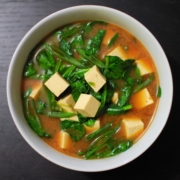
Red miso soup with spinach and tofu

Red miso soup with spinach and tofu

A variation on a warm and nourishing favourite, simple enough for breakfast. This recipe easily doubles.

Ingredients

1 1/2 cups water
1 ‘spring’ dried kombu (about 1/2″)
1/4t coarse sea salt
1 scallion, minced, 3″ – 4″ green reserved for garnish
1t fresh garlic, minced
2t tamari
125g tofu, cut in 1/3″ cubes
1 cup baby spinach
1T red miso
Coarse sea salt and black pepper to taste

Optional: Wakame, shiitake mushrooms, and sesame seeds all make nice additions to this soup. A little nutritional yeast will also add flavour and nutrition. A few drops of toasted sesame oil will also enrich the other flavours, as will a few drops of apple cider or plum vinegar.

Method

In a small pan with a lid, bring the water to a light boil. Add everything up to and including the tofu. Cover, reduce heat to low and simmer for about 10 minutes. Remove from heat. Remove the kombu. Add the spinach and miso. Stir until the spinach is wilted and the miso is dissolved. Ladle out, garnish with scallion sliced on an angle, and enjoy.

Det är självklart att mängden lidande vi utsätter djuren för är förfärlig, och vi borde inte använda dem för syften som saknar vikt, såsom underhållning, men hur kan ni förvänta er att människor ska sluta äta kött?

Denna fråga är passande för vår diskussion då frågan i sig avslöjar mer om historiken kring människa/djur-relationen än någon teori, och den visar på vår förvirring kring moralfrågor generellt.

Många människor gillar att äta djurprodukter. De tycker om att äta dem så mycket att de finner det svårt att separera sin förkärlek för djurprodukter från moralfrågor som handlar om djur. Men moraliska analyser kräver att vi lämnar vår uppenbara partiskhet därhän. Den största källan till lidande för djur i världen idag är framställning av animaliska livsmedel, och det finns absolut inget behov av det. Faktum är att animalisk livsmedelsproduktion har katastrofala effekter på miljön och ett växande antal läkare hävdar att kött och djurprodukter är skadliga för människans hälsa. Vi skulle kunna leva utan att döda djur och skulle då kunna föda ännu fler av världens mänskliga befolkning – de varelser som vi ständigt hävdar att vi bryr oss om när vi försöker rättfärdiga djurutnyttjande – om vi gav upp animaliska livsmedel helt och hållet.

Önskan att äta djurprodukter har fördunklat sinnet hos några av världshistoriens främsta tänkare. Charles Darwin erkände att djur inte var kvalitativt annorlunda än människor och att de besitter många av de karaktärsdrag som vi en gång trodde var unika för människan – men han fortsatte att äta dem. Jeremy Bentham argumenterade att djur hade moraliskt betydelsefulla intressen för att de kunde lida, men han fortsatte också att äta dem.
Det är svårt att bryta gamla vanor, men det betyder inte att de är moraliskt rättfärdiga. Det är just I sådana situationer, där moraliska frågor och starka personliga preferenser samspelar, som det är extra viktigt att anstränga sig för att tänka klart. Men ofta låter vi, som fallet med köttätande visar, våra primitiva preferenser styra vårt moraliska tänkande, snarare än tvärtom. Många människor har sagt till mig: “Ja, jag vet att det är moraliskt fel att äta kött, men jag älskar hamburgare.”

Beklagligt nog för de som gillar att äta djurprodukter, är detta inget argument, och att en gillar hur kött smakar rättfärdigar på inget sätt överträdelser av en moralisk princip. Vårt beteende demonstrerar bara att trots vad vi säger om den moraliska vikten av djurs intressen, så är vi beredda att ignorera dessa intressen när vi drar nytta av att göra det – även om nyttan inte består i annat än välbehag eller bekvämlighet.

Om vi tar moral på allvar, då måste vi konfrontera det den föreskriver: om det är fel att Simon torterar hundar för nöjes skull, då är det moraliskt fel av oss att äta djurprodukter.

Representerar inte djurrättspositionen en religiös uppfattning?

Nej, inte nödvändigtvis, även om idén att vi inte bör behandla djur som saker visserligen är närvarande i flera främst icke-västerländska religiösa system, såsom Jainism, Buddhism och Hinduism. Ironiskt nog används uppfattningen om människans överlägsenhet för att rättfärdiga bruket av djur för matproduktion, djurförsök och liknande verksamheter, på ett nästan religiöst sätt. Det är inte bara den judisk-kristna traditionen som stått bakom synsättet att djur är saker, det har varit den främsta förklaringen för människans överlägsenhet över djur och människans rätt att använda djur som resurser. Vi såg exempelvis att den västerländska uppfattningen av djur som saker kan spåras till en tolkning av Det gamla testamentet, enligt vilket Gud skapade djur som resurser för människan. Argument om en kvalitativ skillnad mellan människor och djur har ofta vilat på en tro på människans förmodade Gudagivna överlägsenhet, som i sig bygger på att människan haft turen att skapas i “Guds avbild”.

Djurrättspositionen som formulerats på denna hemsida är inte beroende av någon teologisk trosföreställning; den kräver bara en enkel tillämpning av jämlikhetsprincipen. Ingen speciell egenskap innehas uteslutande av människor och människor är heller inte fria från någon defekt som de tillskriver djur.

Är inte frågan om huruvida djur ska tilldelas den basala rätten att slippa behandlas som våra resurser en fråga om åsikt? Vilken rätt har någon att säga att någon annan inte får äta kött eller andra djurprodukter eller hur de ska behandla djur?

Djurrätt är inte mer en fråga om åsikt än andra moraliska frågor. Denna fråga är logiskt och moraliskt oskiljaktigt från frågan om huruvida mänskligt slaveri är en moralfråga. Vi har bestämt att slaveri är moraliskt förkastligt inte som en fråga om enbart åsikt, utan på grund av att i slaveri behandlas människor uteslutande som andras resurser och nedvärderas till ting, vilket innebär att de berövas moralisk betydelse.

Frågan huruvida djurrätt är en åsikt är direkt relaterad till djurs status som människans egendom; denna fråga, som många andra frågor som berörs här, bygger på antagandet att det är legitimt att betrakta djur som saker som endast existerar som medel för mänskliga mål. Eftersom vi betraktar djur som vår egendom, anser vi det vara rätt att värdera djur på de sätt vi finner lämpliga. Om vi däremot inte är moraliskt rättfärdiga i att behandla djur som vår egendom, så är frågan om vi bör äta kött, använda djur i experiment eller utsätta dem för smärta och lidande för sport eller underhållning inte mer åsikt än den om det mänskliga slaveriets moraliska riktighet.

Dessutom, så länge djur behandlas som egendom, kommer vi fortsätta att tro att det som utgör “human” behandling för din djur-egendom verkligen handlar om din åsikt på grund av att du avgör hur mycket din egendom är värd. Precis som vi har åsikter om värdet av andra saker vi äger, kan vi ha åsikter gällande värdet av vår djur-egendom. Även om vi värderar vår egendom för högt eller för lågt relativt dess marknadsvärde, ses normalt inte detta som en moralfråga. Så när Jane kritiserar Simon för att han slår sin hund regelbundet för att säkerställa att hunden är en våldsam och effektiv vakthund, har Simon all rätt att svara Jane att hennes värdering av hans egendom inte är en moralfråga, utan en fråga om hans äganderätt.

På ett annat plan relaterar denna fråga till ett ämne som diskuterades i introduktionen, synpunkten att all moral är relativ, en fråga om konvention, bekvämlighet eller tradition, utan giltigt anspråk på objektiv sanning. Om så vore fallet, då skulle också frågan om huruvida massmord, mänskligt slaveri eller övergrepp på barn är moraliskt rättfärdigat bara handla om åsikt. Även om det stämmer att moralfrågor inte kan bevisas på samma sätt som matematiska påståenden kan, betyder det inte att “vad som helst” är tillåtet. En del moralfrågor understöds av bättre skäl än andra, och en del moralfrågor passar bättre med andra synsätt vi har. Synsättet att vi kan behandla djur som våra saker endast på grund av att vi är människor och de inte är det är helt enkelt speciesism. Synsättet att vi inte bör behandla djur som saker är konsekvent med vår generella uppfattning att djur har moraliskt betydelsefulla intressen. Vi behandlar inte någon människa uteslutande som resurs; vi har avskaffat mänskligt slaveri som institution. Vi har sett att det inte finns någon god moralisk grund att behandla djur annorlunda när det gäller den enskilda rätten att inte bli behandlad som ett ting, och att djurrättspositionen inte hindrar oss från att prioritera människan framför djuret i en konfliktsituation där vi har inte har skapat konflikten från början genom att bryta mot jämlikhetsprincipen.

Om djur har rättigheter, innebär inte det att vi måste ingripa och stoppa djur från att döda andra djur, eller att vi måste handla för att förhindra att djur skadas överhuvudtaget?

Nej. Den grundläggande rättigheten att inte bli behandlad som en sak innebär att vi inte kan behandla djur uteslutande som medel för mänskliga mål – på samma sätt som vi inte kan behandla människor uteslutande som medel för mänskliga mål. Även om vi har lagar som förhindrar människor från att äga andra människor, eller att utan deras samtycke använda dem som biomedicinska subjekt, kräver vi generellt inte att människor förhindrar att andra människor skadas i alla situationer. Ingen lag kräver att Jane förhindrar Simon från att skada John, så länge Jane och Simon inte konspirerar i ett brott mot John eller i övrigt handlar i samförstånd, och så länge som Jane inte har en relation till John som skulle ge uppkomst till en sådan skyldighet.

I USA ålägger dessutom lagen inte människor någon “plikt i att hjälpa” även när andra människor är involverade. Om jag går på en gata och ser en person som svimmat med ansiktet nere i en vattenpöl och håller på att drunkna, ålägger inte lagen mig någon skyldighet att hjälpa personen även om allt jag behöver göra är att rulla runt personen, något jag kan göra utan risk och utan att själv besväras av det.

Poängen är att människors grundläggande rättighet att inte bli behandlade som saker inte garanterar att människor kommer hjälpa andra människor, eller att vi är skyldiga att ingripa för att människor inte skadas av djur eller av andra människor. På samma sätt innebär djurs grundläggande rättighet att inte behandlas som saker att vi inte kan behandla dem som våra resurser. Det innebär inte nödvändigtvis att vi har moraliska eller lagliga skyldigheter att hjälpa dem eller att förhindra att de skadas.